
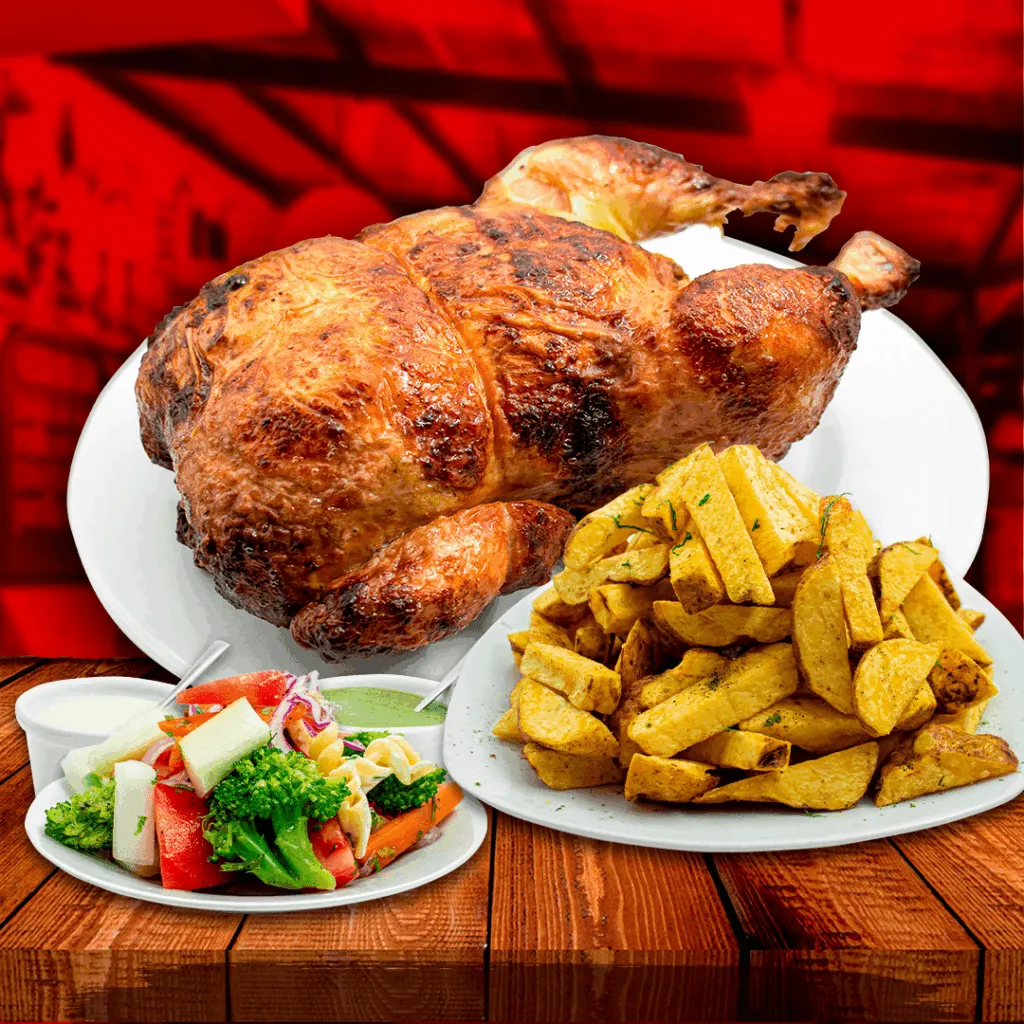
In Peru, pollo a la brasa (rotisserie chicken roasted over coals) is the Sunday plan, the Friday dinner and the safe order when nobody knows what to eat. But it is a young dish: it is just over 75 years old. Here is how it was born on a farm on the outskirts of Lima, who invented it and how it reached the whole country.
A farm in Santa Clara and a business that was not working
The story begins in the late 1940s in Santa Clara, on the outskirts of Lima, next to the Carretera Central highway. Roger Schuler, a Swiss immigrant, was raising chickens, and the business was not going well.
The versions differ in the details:
- According to the newspaper El Comercio, Schuler ended up in debt with hundreds of unsold chickens, and came up with the idea of selling them already cooked. He put up a sign offering all the chicken you could eat for five soles.
- According to the broadcaster RPP, the cooking method came from watching how his cook prepared chicken.
That is how La Granja Azul was born. It is still open in Santa Clara and is known as the first pollería (rotisserie chicken restaurant) in Peru.
1949 or 1950? The sources disagree. The news agency Andina says 1949; El Comercio gives February 5, 1950 as the founding date.
The spit: the key to the invention
To roast many chickens at once and evenly, Schuler worked with Franz Ulrich, a Swiss friend and mechanical engineer. According to El Comercio, together they designed the first rotating spit in the country: whole chickens turned over wood embers.
That is the origin of the pollería oven we know today, the rotombo, where the chicken turns on its axis as it browns. According to RPP, it can run on charcoal, wood or gas; wood is the most traditional, often algarrobo (Peruvian carob).
The seasoning: from salt to spices
At La Granja Azul the chicken is still made with just salt and no marinade, according to El Comercio. But across the rest of the country every pollería has its own recipe, almost always secret. The sources mention, in different proportions:
- salt, pepper and cumin;
- garlic and ají panca (a mild dried red chili);
- rosemary and oregano (and, according to RPP, huacatay, a Peruvian black mint);
- soy sauce, vinegar and dark beer.
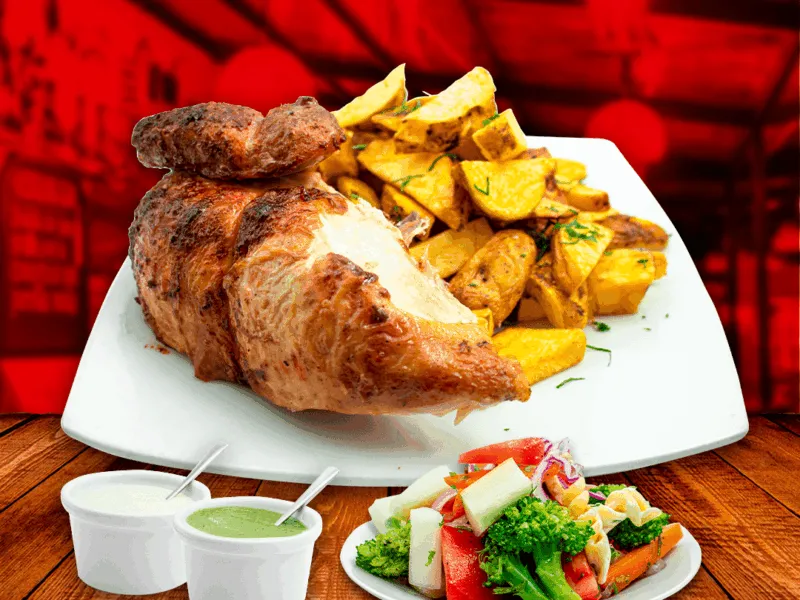
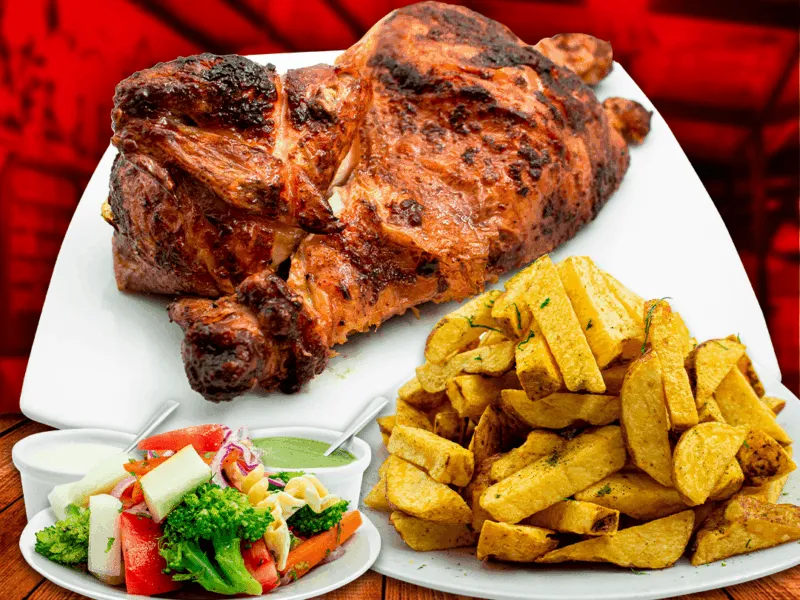
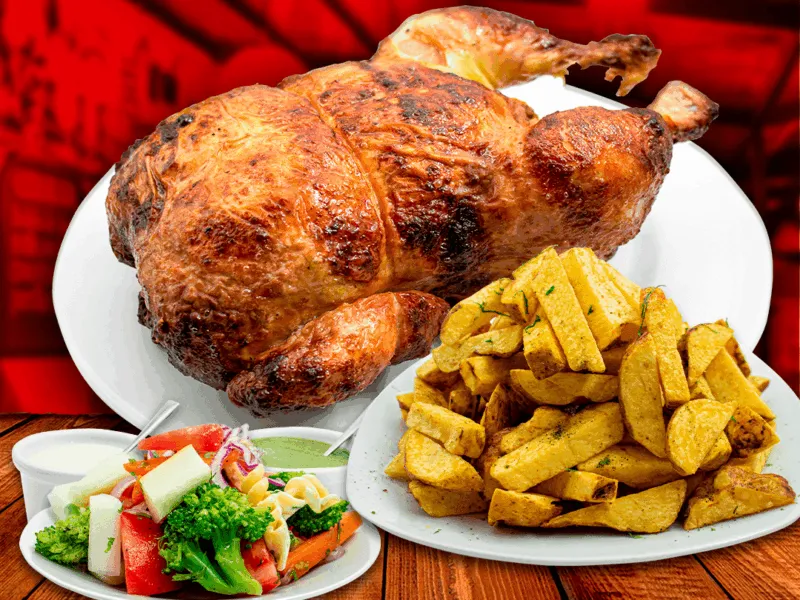
The classic sides are French fries and a fresh salad, with mayonnaise, ketchup and mustard.
From a Sunday treat to a dish for the whole country
At first, RPP says, pollo a la brasa was a treat for the upper classes who drove out to Santa Clara to eat. Over the years it became a dish for everyone, and neighborhood pollerías appeared. According to a list of registered trademarks from Indecopi (Peru’s trademark office) published by Andina, some of the oldest pollerías in Lima are:
| Pollería | Year |
|---|---|
| La Granja Azul | 1949 |
| Caravana | 1966 |
| Timbó | 1974 |
| Norky’s | 1976 |
| Hikari | 1978 |
| Pardos Chicken | 1986 |
Today there are more than 13,000 pollerías across Peru (Andina), and according to Peru’s Ministry of Agriculture (Midagri), quoted by Andina in 2025, pollo a la brasa uses 20% of the country’s poultry production: more than 150 million chickens a year.
A Peruvian culinary specialty with its own day in July
- 2004: the Peruvian State recognized it as a Peruvian culinary specialty (RPP, and Infobae citing the official gazette).
- 2010: Ministerial Resolution 0441-2010-AG set Pollo a la Brasa Day on the third Sunday of July. In 2027 it falls on Sunday, July 18.
Where to eat pollo a la brasa in Cusco
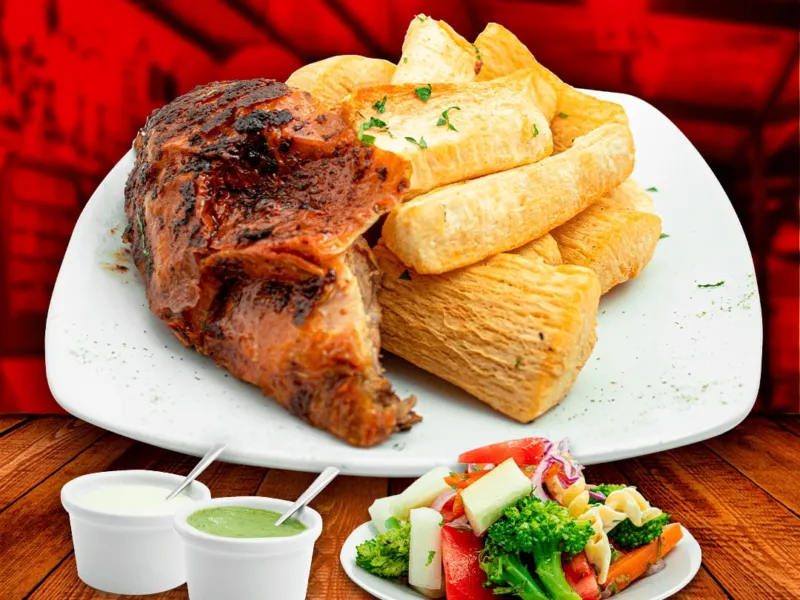
At Águeda we only serve pollo a la brasa at our Collasuyo location, on Avenida Collasuyo in Magisterio, near the Real Plaza mall. We roast it over wood, like the first spits in Santa Clara, and season it with our own house marinade. There is more about that location in our guide to where to eat near Real Plaza Cusco.
| Portion | Side | Price |
|---|---|---|
| Eighth chicken | Fries or cassava | S/.15 |
| Quarter chicken (breast or leg) | Fries or cassava | S/.24 |
| Half chicken | Fries, cassava or mixed | S/.44 |
| Whole chicken | Fries, cassava or mixed | S/.83 |
You can eat in, order delivery or pick it up. See every portion on our rotisserie chicken menu. And if some at the table want chicken and others want beef, Collasuyo also has our grills: see which grill to order for your group.
Sources (in Spanish): El Comercio, Granja Azul at 75 (2025), RPP, History of pollo a la brasa (2011), Andina, the oldest pollerías in Lima (2022), Andina, the key ingredients (2024), Andina, 20% of poultry production (2025) and Infobae (2004).
Frequently asked questions
Who invented pollo a la brasa?
Roger Schuler, a Swiss immigrant, at La Granja Azul in Santa Clara, on the outskirts of Lima. With his friend Franz Ulrich, a mechanical engineer, he designed the rotating spit to roast many chickens at once.
What year was pollo a la brasa created?
In the late 1940s: Andina says 1949, and El Comercio gives February 5, 1950 as the founding date of La Granja Azul.
What was the first pollería in Peru?
La Granja Azul, in Santa Clara, on the Carretera Central highway outside Lima. It is still open.
When is Pollo a la Brasa Day?
The third Sunday of July, since 2010 (Ministerial Resolution 0441-2010-AG). In 2027 it falls on July 18.
Where can I eat pollo a la brasa in Cusco?
At Águeda Collasuyo, on Avenida Collasuyo (Magisterio), near the Real Plaza mall. We roast it over wood with our own house marinade: eighth, quarter, half or whole chicken, from S/.15. It is the only one of our locations that serves pollo a la brasa.