
Few dishes tell Peru’s story as well as lomo saltado. On one plate you find the beef, onion and tomato of Creole cooking, our own ají amarillo chili, the soy sauce and wok brought by Chinese immigrants, and the fries that can never be missing. And as a butcher, I will also tell you why the cut and the fire are everything in this dish.
A dish born from an encounter
The story begins in 1849, when the first Chinese immigrants arrived in Peru, hired mostly to work on the coastal haciendas. They brought their ingredients, such as soy sauce and ginger, and a way of cooking that changed our cuisine: quick stir-frying over very high heat in a wok.
Over the years that technique met Peruvian ingredients and chifa was born, the Chinese-Peruvian cuisine. The first chifa restaurants opened in Lima around the 1920s, and by then stir-frying was already part of every Peruvian table.
The first written record
Lomo saltado already appears, with a short description, in a Peruvian cookbook from 1903, the Nuevo manual de cocina a la criolla. It shows that the Chinese technique had become part of Creole cooking by the early 20th century. Since then the dish has evolved into the version we know today, with fries and white rice.
Why is it called “saltado”?
Because of the way it is cooked. Saltear means to stir-fry quickly over very high heat, tossing the pan so the ingredients “jump” (saltar). The meat gets seared outside and stays juicy inside, and the onion and tomato keep their texture instead of falling apart.
What goes into a good lomo saltado
- Tenderloin cut into strips.
- Red onion in wedges and tomato in strips.
- Ají amarillo, the Peruvian touch.
- Soy sauce and a splash of vinegar, for the juices.
- Cilantro, chopped at the end.
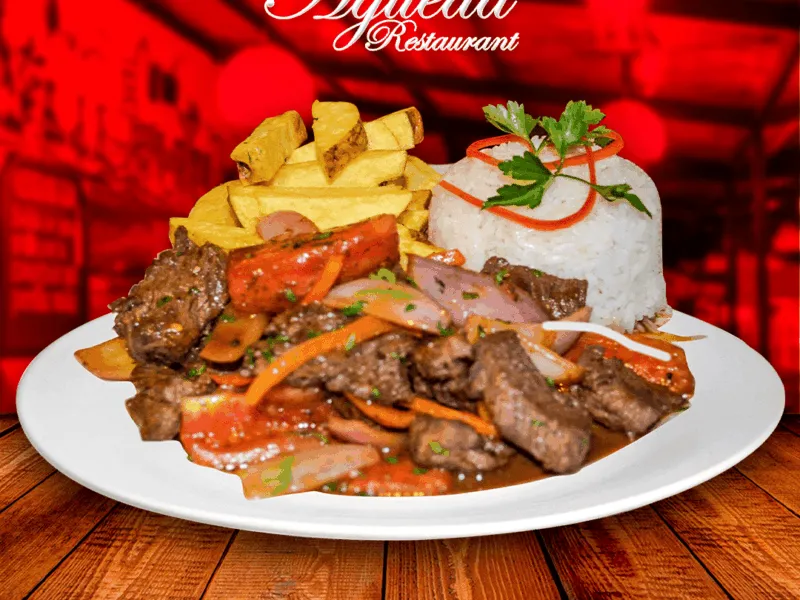
- Fries and white rice on the side.
The secret is the meat and the fire
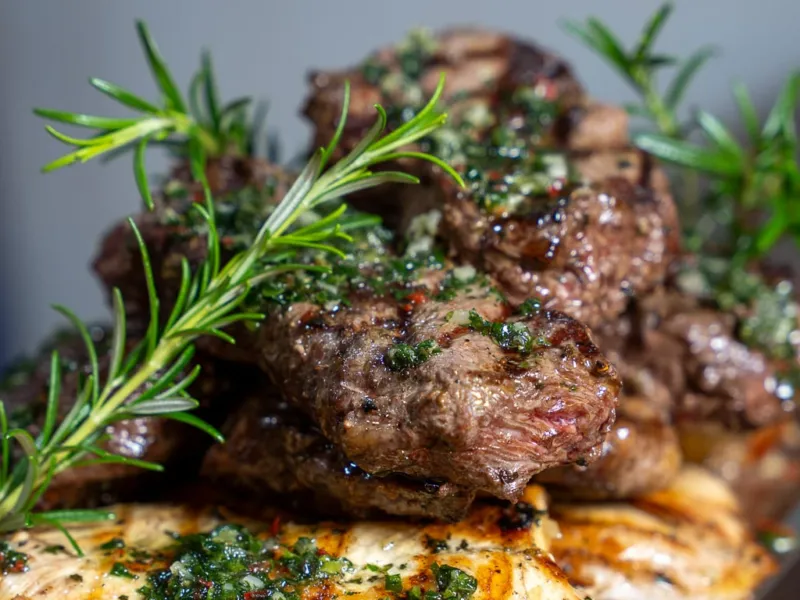
Here I speak as a butcher. Lomo saltado is made with tenderloin, the most tender cut of beef, because it cooks in seconds and there is no time to tenderize a tough cut. That is why at Águeda we make it with Peruvian tenderloin from improved cattle raised in Puno, Anta, Sicuani and Arequipa.
Three tips if you cook it at home:
- Slice against the grain, into finger-thick strips.
- Very high heat and a little meat at a time. If you crowd the pan, the meat releases its juices and ends up boiled instead of stir-fried.
- Add the fries at the end. Mixed in too early, they go soft in the juices.
To learn more about tenderloin and other cuts, read our steak cuts guide.
Our versions at Águeda
We serve two lomo saltados, S/.47 each:
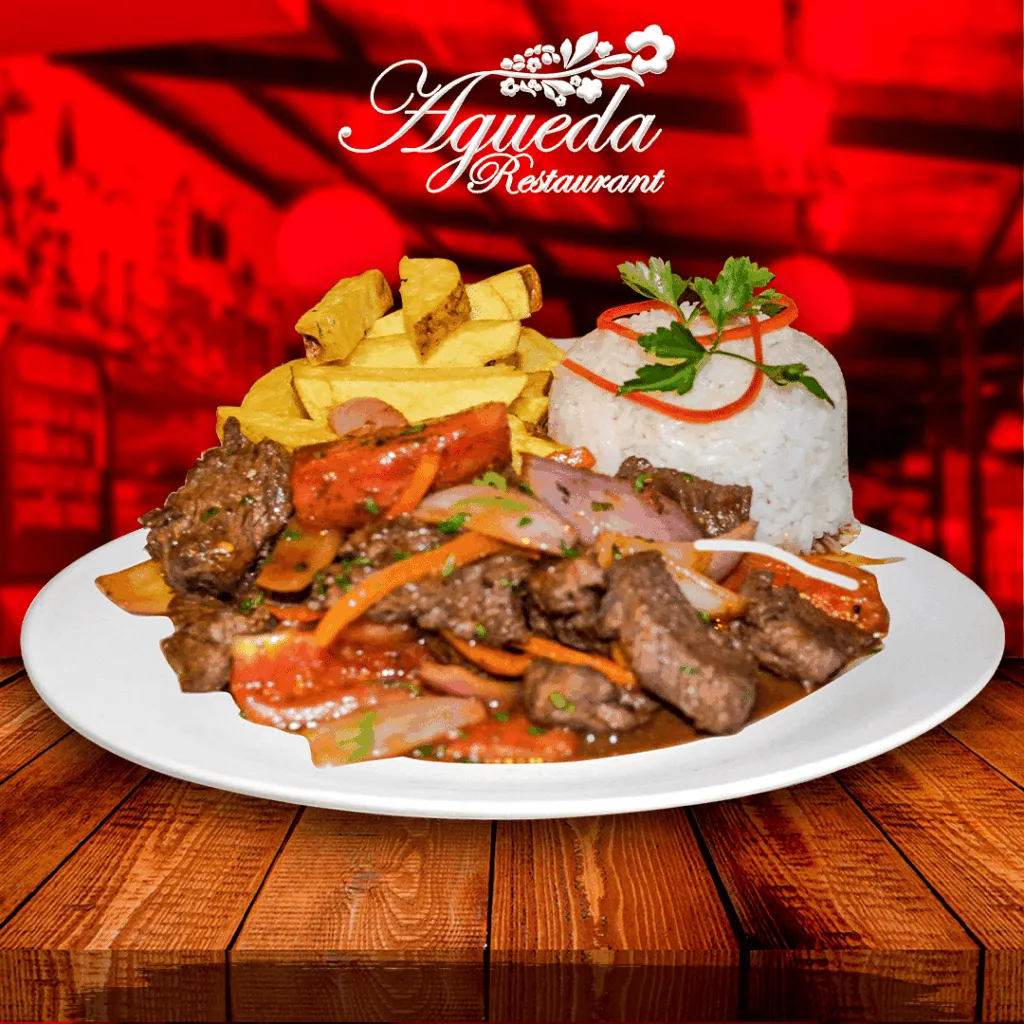
- The Classic Lomo Saltado: tenderloin stir-fried in a wok with onion, tomato and fries, the traditional way.
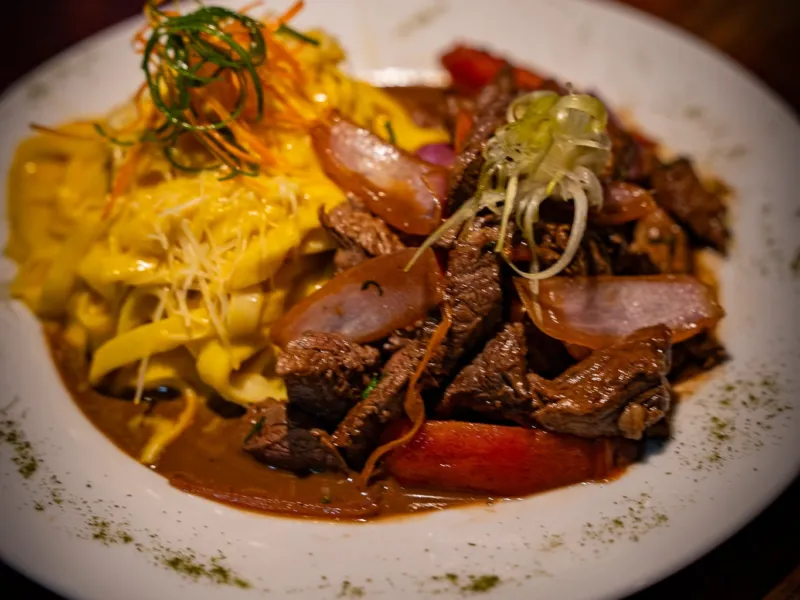
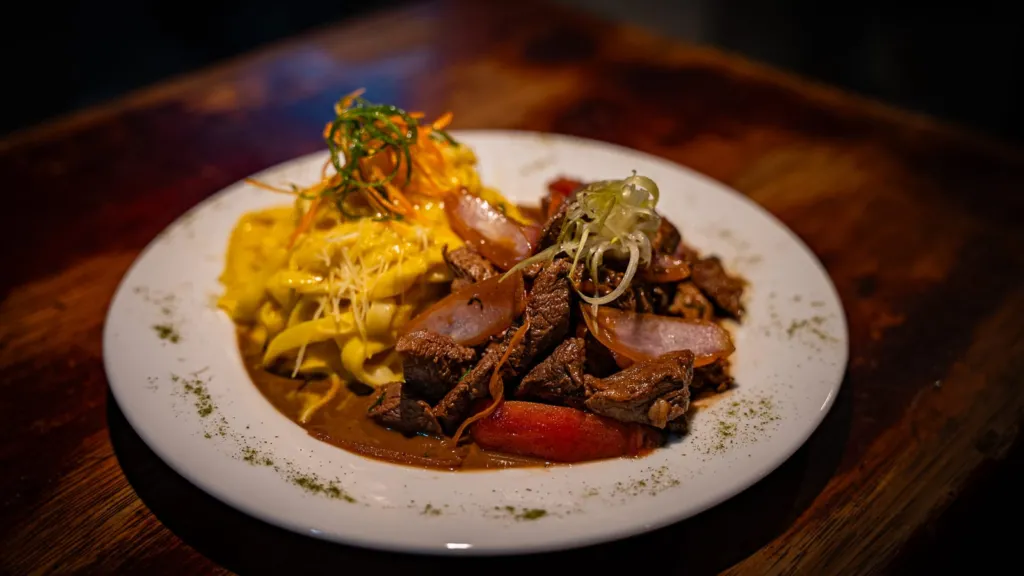
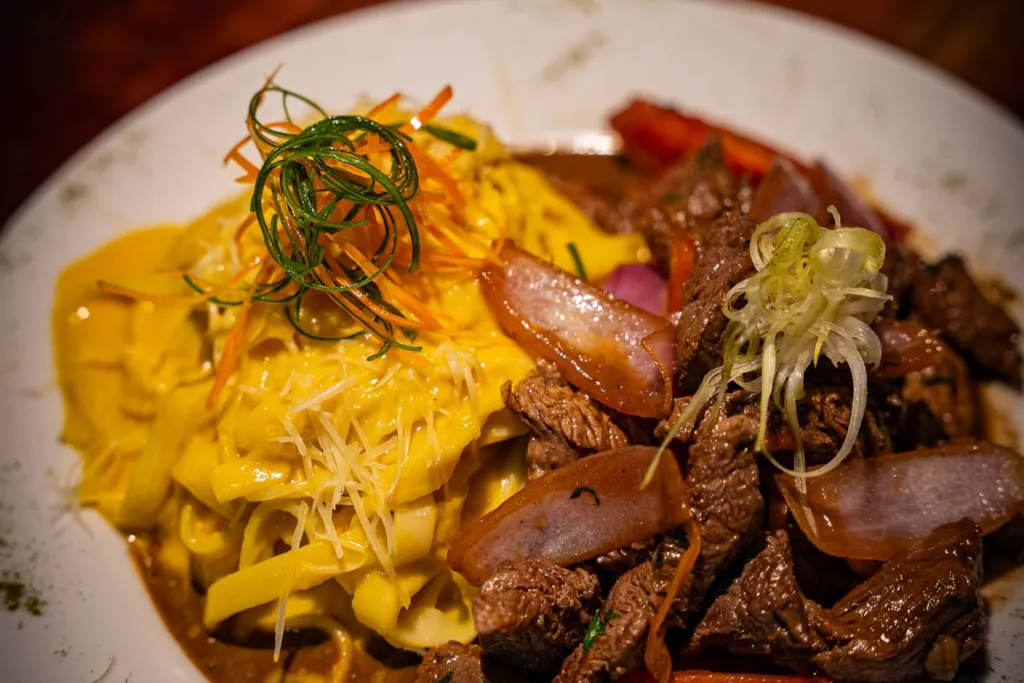
- The Lomo Saltado with Huancaína Fettuccine: our saltado served over fettuccine in Huancaína sauce. A fusion of the Chinese wok, pasta and the most Andean sauce of Peruvian cooking.
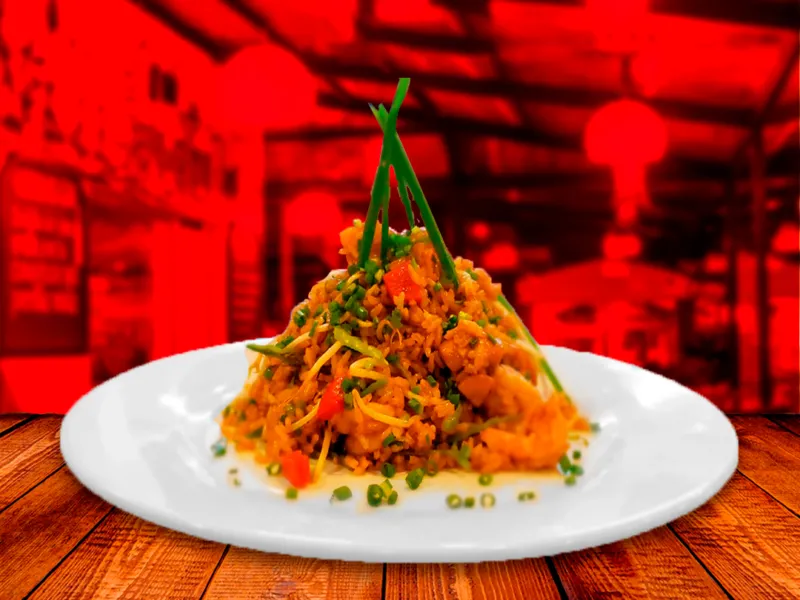
The chifa family continues on our menu with chaufa fried rice: chicken or vegetarian (S/.26), trout (S/.37) and the Prawn Chaufa (S/.39).
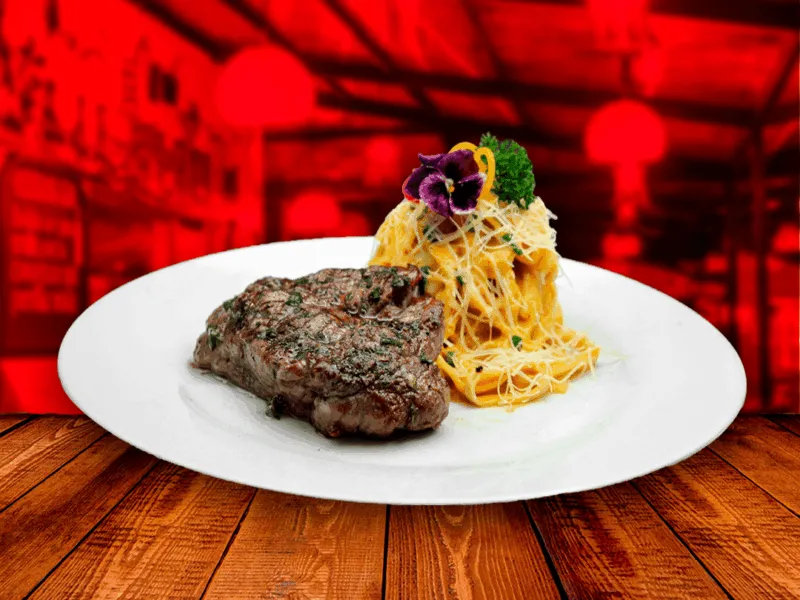
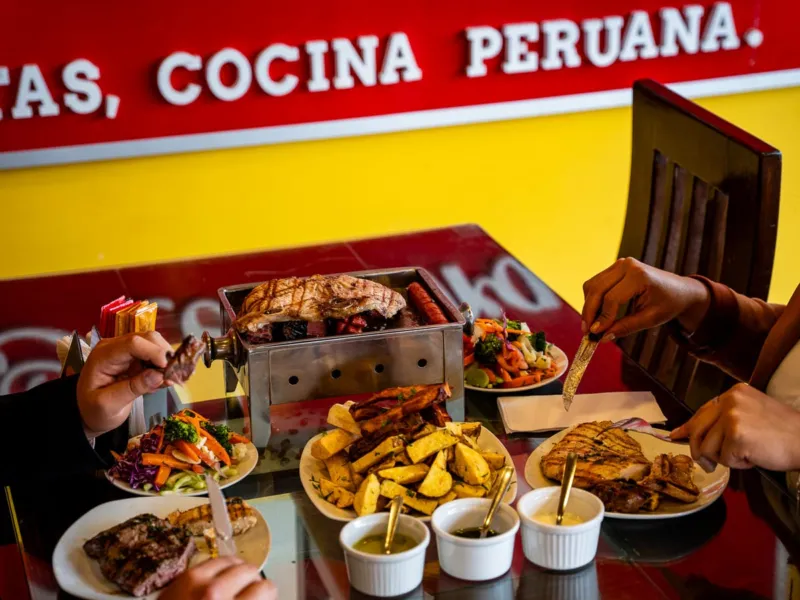
When dining in, main courses include our complimentary salad bar. And if it is your first time in Cusco, after the lomo saltado try our most local meat: the Alpaca Loin (S/.47). For me, alpaca is the best meat you can eat in Cusco.
Order your lomo saltado on the online menu for delivery or pick-up, or book a table at Matará, Collasuyo or Ttio. Visiting Cusco? See also what to eat in Cusco’s Historic Center.
Sources on the history of the dish: Wikipedia and El Comercio (Spanish).
Frequently asked questions
Where does lomo saltado come from?
It was born from the meeting of Creole cooking and the Chinese wok stir-fry technique, brought by Chinese immigrants who arrived in Peru from 1849. It is one of the great dishes of chifa, Chinese-Peruvian cuisine.
How old is lomo saltado?
It is already described in a Peruvian cookbook from 1903, the Nuevo manual de cocina a la criolla.
Why is it called lomo saltado?
Because it is stir-fried (salteado): cooked quickly over very high heat while tossing the pan so the ingredients jump. The meat stays seared outside and juicy inside.
Which meat is used for lomo saltado?
Tenderloin, the most tender cut of beef, because it cooks in seconds. At Águeda we use Peruvian tenderloin.
How much is lomo saltado at Águeda?
The Classic Lomo Saltado and the Lomo Saltado with Huancaína Fettuccine cost S/.47 each.